Lithuanian Citizenship by Marriage: Eligibility Rules
Marriage to a Lithuanian citizen can create a specific route
Reclaim your Lithuanian roots and gain full EU citizenship rights. Our legal experts help Americans, Canadians, and global applicants navigate the process smoothly.
Reclaim your Lithuanian roots and gain full EU citizenship rights. If your family story crosses oceans and decades, we turn that legacy into recognized legal status. Our firm helps Americans, Canadians, and clients worldwide move from “Maybe I qualify?” to “Approved” with a structured, done-for-you process. This is a service page, not a history lesson: we diagnose your chances, build your evidence, and manage the filing—so you can focus on life, not paperwork
Submit your details and our expert will review your case and contact you with your initial Lithuanian dual citizenship assessment
We provide a full, free eligibility evaluation to determine whether you meet the legal requirements for restoring Lithuanian citizenship
Our team handles the entire Lithuanian citizenship restoration process—from documents to approval—so you receive your citizenship without stress
Lithuania recognizes dual status in clearly defined situations where citizenship was lost without free choice—war, occupation, forced displacement—and, in specific scenarios, for descendants. People usually start with a simple question—does lithuania allow dual citizenship—because they need a reliable “yes/no.” The accurate answer is “yes,” but only when your facts match the legal grounds and your documents prove them. That is where professional help saves months: we translate family memory into a clean legal narrative the state can accept.
When we screen a case, we look for three pillars: a Lithuanian citizen in your line before 15 June 1940, proof that loss of status was involuntary, and a continuous chain of records linking you to that ancestor. If those pillars are present or can be built with archive pulls, you’re in a strong position. If they’re not, we’ll tell you early, suggest alternatives, and spare you sunk costs. Our aim is simple: clarity first, action second, success third.
Full Lithuanian citizenship restoration service
Secure & Accurate application filing
Years of Experience
Clients Assisted Worldwide
Success Rate for Eligible Cases
Citizenship Law Experts
Before you email archives or order translations, pause and test your situation against real-world approval patterns. Officials don’t weigh emotions; they weigh dates, places, seals, and continuity. Reading the categories below literally (and thinking in documents rather than memories) lets you decide fast whether to proceed. If you recognize your family, you’re ready for a document plan. If not, deeper archival work can still surface the missing link—we do that every week.
We see the strongest outcomes when the family story fits one of these frames and the evidence is clean. Read each as a “legal doorway,” not a guarantee. After you identify the doorway, our job is to make your file walk through it without stumbling.
When a case sits in these lanes, speed depends on evidence quality, not luck. We align spellings, explain variants, and bridge gaps with church books, municipal registers, or interwar records. That is why many clients who found “impossible” threads on their own see approvals with us—the story didn’t change, the evidence did. If you’re close but not quite there, we’ll show the shortest path to “complete.”
It’s just as valuable to identify dead ends early. The patterns below look promising in conversation but fail under legal scrutiny. If you see yourself here, recalibrate now rather than wait months for a refusal. Sometimes the problem is the ground; sometimes it’s the proof. Either way, a precise plan will save time, money, and energy.
Not all “no’s” are final. We often switch a client to a different route or rebuild the file with targeted archives. If there’s a viable angle, we’ll propose it with clear odds and steps; if not, we’ll say so plainly. Honest triage is part of good service. You can find more details about the criteria for obtaining dual Lithuanian citizenship here.
A passport isn’t a trophy—it’s a tool. Our clients usually care about three things: freedom to move, stability for family and business, and a recognized connection to origin. If two or more benefits below resonate, the process likely pays for itself in options and peace of mind. And yes, this is dual citizenship lithuania as a practical life upgrade, not just a sentimental project.
Most people want outcomes, not poetry. Read each point as a day-to-day scenario you can actually use, not a slogan. Then picture the moment it helps—signing a contract, enrolling a child, landing in a country without thinking about visas.
These advantages compound with time: mobility today, a degree tomorrow, investment the year after. For business owners, EU status often shortens onboarding with payment providers and banks. For families, it formalizes a bond you already feel. That’s why this decision is rarely about a glossy booklet and mostly about life design that finally aligns with your plans.
The process looks heavy from the outside, but it’s a sequence of clean steps. Success is rarely about a “magic document” and mostly about order: what comes first, what follows, and why. Our role is to design that order, obtain what’s missing, and present your case so it reads as inevitable.
Start with a one-page family line: you → parent(s) → grandparent(s) (further if needed). Identify the Lithuanian ancestor holding citizenship before 15 June 1940, then list names, dates, places, migrations, and variants. This is the moment to ask can you have dual citizenship in lithuania under your specific facts—not in theory. We run a fast legal check and give you a yes/no/maybe with reasons and next steps.
After mapping, we write a 10-sentence synopsis in plain English. If a reader can follow it in a minute, you’re ready for documents. If not, we tighten the chain or fetch the missing proof before you spend on translations.
Before you fill a form, build the “skeleton” (lineage) and the “muscle” (context). Quality matters as much as quantity: long-form entries, legible seals, correct translations, and apostilles/legalization where required. We standardize file names and produce a numbered exhibit list so the reviewer can navigate in seconds.
Once the core set is assembled, we harmonize transliterations (e.g., Jonas/Jan/John), add bridging evidence for contradictions, and draft a contents page that “tells the story” without fluff. The less detective work you force on a reviewer, the fewer follow-ups you’ll receive. That’s how you convert months of silence into weeks of progress.
We file through the Lithuanian Migration Department or a Lithuanian consulate abroad and present a cover memo with a numbered exhibit book. Your master folder carries a clear title—lithuanian dual citizenship application—and we keep cloud and offline backups. Originals stay safe and accessible in case the officer requests sight.
Think of the submission like a concise book: title page, table of contents, and chapters that flow. When your file reads well, it moves well—and that’s not luck, it’s structure.
Expect 6–12 months for standard cases; complex histories can take longer. Treat requests for clarification as chances to strengthen the file. We reply with page references, clean scans, and succinct explanations. Silence is normal; panic is optional. A tidy submission shortens the quiet period because there’s less to question and less to fix.
Approval is followed by formalities and a passport application at the consulate or in Lithuania. Many clients describe this as the circle closing—getting lithuanian dual citizenship is both a legal act and a family moment. From here, your plans shift from “if” to “when.”
Documents aren’t bureaucracy for its own sake; they’re the language the state understands. Start with the core line (who descends from whom), then add context that stitches gaps. Don’t hoard paper—curate it. Every document should answer a specific reviewer question: where did you get this, what does it prove, and how does it fit?
Begin with the center of gravity. If these three elements are clear, the case usually moves with speed and confidence. We check completeness of dates and places, verify spellings, and preempt obvious doubts with a short note. When the heart of the file beats, the rest is technique and time.
A concise lineage diagram helps: person → documents → what each proves. Reviewers are human; visual clarity reduces uncertainty—and delays. If one of these items is weak, we fix it first; everything else depends on this backbone.
The second tier provides glue. This is where history feels alive: ship manifests, camp records, parish books, municipal registers. These sources often rescue cases where a civil record is missing or flawed. Use them to corroborate, not to confuse—and let us draft the short “purpose line” that explains each exhibit.
When several independent sources paint the same picture, approvals feel inevitable rather than risky. That’s exactly what we engineer: multiple, consistent angles on the same fact, all easy to verify. It’s the difference between “maybe” and “yes.”
In plain terms, the law aims to restore what history interrupted. Involuntary loss opens a path for descendants; voluntary renunciation usually closes it. Evidence rules matter: names, dates, seals, and the stubborn consistency of records. Some clients ask more broadly—does lithuania have dual citizenship as a policy? The answer is selective: restoration and specific grounds, not a universal two-passports-for-all model.
No one expects a perfect archive. Officials expect a credible story supported by reliable documents. Where civil registers are missing, parish entries help; where names drift, bridging notes and corroboration tie them down. Lawyers don’t read minds; they read structure. We provide that structure so your outcome depends on facts—not on luck or a reviewer’s mood.
Learning from other applicants saves months. The issues below repeat often, which makes them solvable. If you recognize your situation, fix it now rather than wait for an official request. Fifteen minutes of prevention can save three months of rework—and we’ll do the heavy lifting.
Treat this list as a pre-flight checklist. If one line applies, assign a task and close it before you file. Clean inputs lead to clean outcomes, and that is the fastest way to approval.
The upside: every flaw has a technical remedy—re-translate, re-scan, fetch a better extract, or annotate the variant. Progress in complex files is a craft, not a lottery. With our process, your case stops feeling fragile and starts feeling inevitable.
This is a service, not a DIY tutorial. We cut out confusion, control the sequence, and keep your file moving. Whether you need a fast “go/no-go” review or full representation to passport in hand, we tailor scope to your bandwidth and timeline. When people search for dual citizenship in Lithuania, what they actually want is a partner who can get it done.
Think of these as modular tools. Use one, two, or the full suite—either way, you get a file that reads as complete, coherent, and calm. That’s what persuades reviewers.
You don’t end up with a pile of scans; you end up with a case. Clean structure invites focused questions—or a clean approval. That is the advantage of using a specialist rather than “hoping for the best.”
Bring what you have: a town on a postcard, a 1930s photograph, a birth year that drifts by one. We’ll turn fragments into a file a civil servant can understand—and respect. If you’ve been applying for lithuanian dual citizenship alone and stalled, we’ll triage, rebuild, and finish. If you’re just starting, we’ll test your odds and map the shortest path to approval. And when someone later asks about lithuanian passport dual citizenship, you’ll have the answer in your hand.
Ready to move? Request your free eligibility check today. We’ll confirm your route, quote a fixed fee, and start getting lithuanian dual citizenship from a distant possibility to a documented reality—step by step, without the guesswork.
Yes, in defined scenarios tied to involuntary loss and enumerated grounds. Proof, not residence, is decisive.
Yes, if lineage is documented and legal tests are met. Residence abroad doesn’t block you; weak evidence does.
Plan for 6–12 months after a clean filing. Archive delays and name variants can add time; tidy submissions shorten it.
EU mobility, work and study rights, property and business opportunities, consular protection, and a recognized reconnection with heritage.
Our staff includes seasoned professionals in citizenship and migration law, supported by translators and a client assistance team working to secure the best results for every case. Get to know the specialists guiding you.
I worked with DE Civitate to restore my Lithuanian citizenship through my grandfather’s side of the family, and I’m very glad I didn’t try to handle it alone. At first, I thought it would be a simple “collect documents and submit” situation, but there were a lot of details that could easily have caused delays—name variations in records, missing certificates, and questions about how to prove the family line properly. DE Civitate broke everything down step by step, told me exactly what mattered, and helped us build a clean, well-organized file. They were responsive, straightforward, and very methodical, which made the whole process feel manageable instead of overwhelming. In the end, we achieved a positive outcome. I would absolutely recommend DE Civitate to anyone going through Lithuanian citizenship restoration.
I used DE Civitate to help restore my mother’s Lithuanian citizenship, and I’m genuinely grateful we chose them. This process is long and paperwork-heavy, and in our case it suddenly got more complicated than we expected. DE Civitate stayed calm, explained what was happening in plain language, and told us exactly what they needed from us and why. They handled the tricky parts, kept things moving, and were quick to respond whenever we had questions. In the end, everything worked out and we got a positive result. If you’re dealing with Lithuanian citizenship restoration and don’t want to risk mistakes or delays, I’d strongly recommend DE Civitate.
Marriage to a Lithuanian citizen can create a specific route
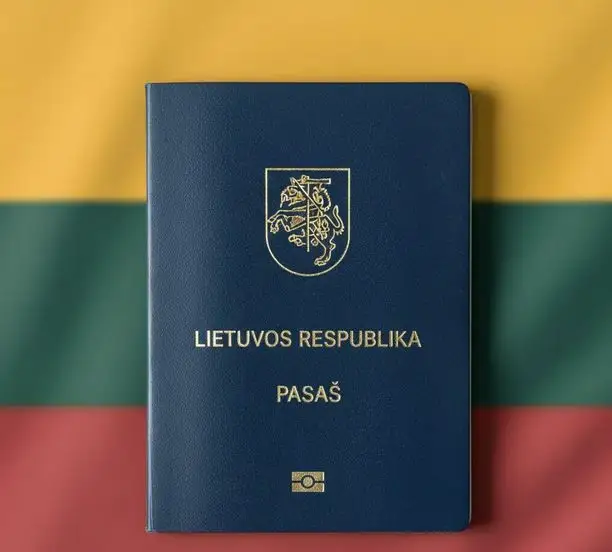
A person who holds both U.S. and Lithuanian citizenship may
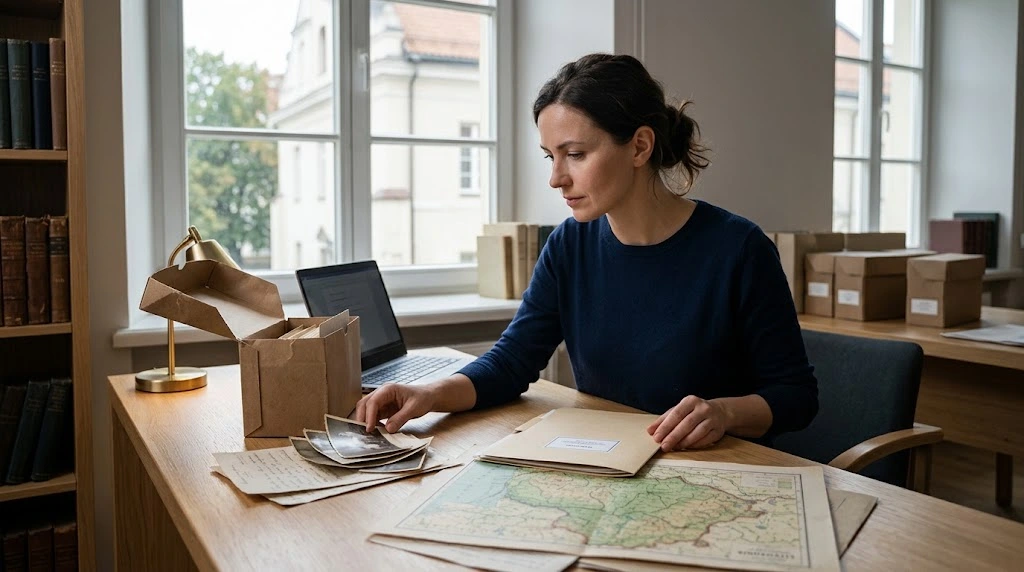
or a U.S. citizen considering Lithuanian citizenship restoration, the potential
Popular queries